Visiting Rishikesh in Monsoon: Rafting Bans & Luxury Guide
Planning a monsoon trip to Rishikesh? Learn about river rafting bans, mountain road safety, landslide zones, and the rise of secluded indoor luxury stays.

























When most travelers picture Rishikesh, they envision high-octane white-water rafting through the roaring rapids of Shivpuri, sun-drenched beach camps along sandy riverbanks, and bustling cafe terraces in Tapovan. But between late June and late September, the arrival of the South Asian monsoon completely rewrites the identity of the Yoga Capital.
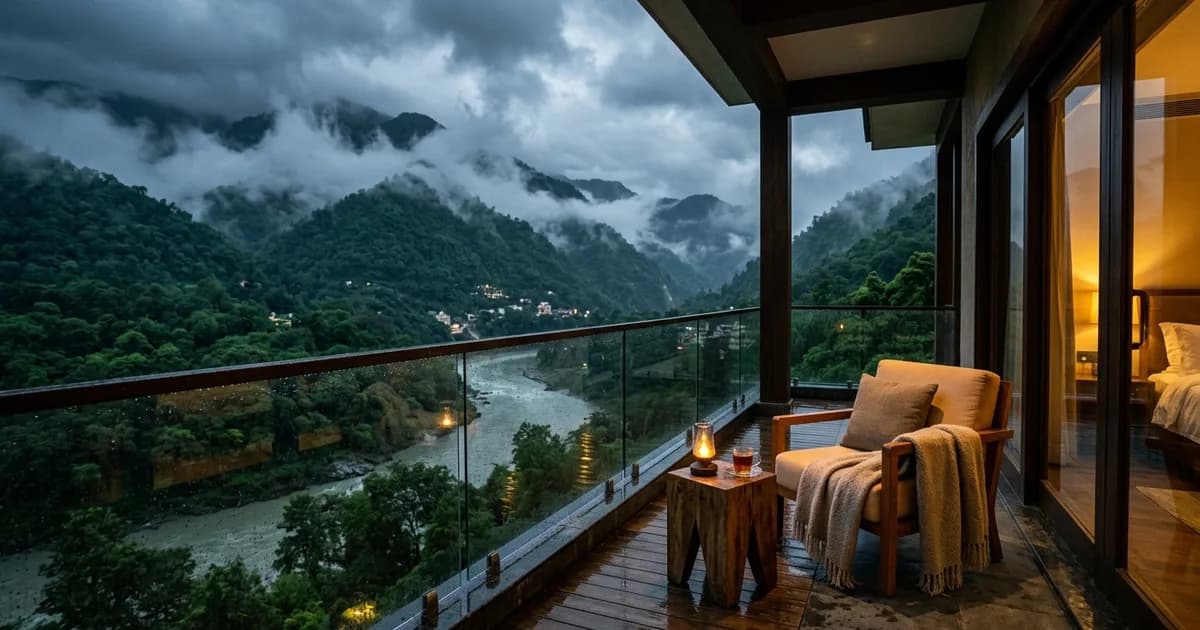
The roaring, turquoise Ganges turns into a deep, clay-colored torrent. Thunderheads roll down from the Garhwal Himalayas, enveloping the steep jungle ridges in ethereal blankets of cloud and mist. The relentless mountain rain washes away the tourist crowds, closing down high-risk adventure sports and prompting government agencies to implement mandatory safety bans across the river corridor.
For casual budget backpackers looking for cheap river rafting and riverside party tents, the monsoon is an outright dealbreaker. For high-net-worth travelers, corporate executives, couples, and VIP guests, however, the rainy season represents Rishikesh’s most enchanting, intimate, and secluded secret.
As a luxury concierge team handling private villa reservations and discreet outcall hospitality across Uttarakhand, we guide dozens of high-profile clients through the monsoon every year. Here is the operational reality of visiting Rishikesh during the rains: from official river rafting bans and mountain road conditions on the Badrinath National Highway to the art of curating a flawless, private indoor luxury retreat.
Official Rafting Ban: Rules, Dates & River Realities
The single most frequent question out-of-town visitors ask between June and September is: "Is river rafting open in Rishikesh during the monsoon?"
The definitive, non-negotiable answer is no.
Every year, the Uttarakhand Tourism Development Board (UTDB) alongside the Tehri Garhwal and Pauri Garhwal District Administrations enforces a total ban on commercial river rafting and motorized watersports across the entire upper Ganges stretch.
Official Seasonal River Rafting Schedule (Ganges Corridor)
Commercial rafting fully operational across Kaudiyala, Marine Drive, and Shivpuri.
Total statutory safety shutdown across all river stretches due to high monsoon discharge.
UTDB river safety inspections conclude and licensed operations officially restart.
Why the Government Enforces the Ban
This is not a casual recommendation—it is a legally binding directive backed by local water police and river safety squads. The closure is governed by critical hydrologic realities:
- Dangerous Water Levels & Flow Rates: During peak monsoon downpours in the upper catchment zones of Chamoli, Rudraprayag, and Tehri, the volume of water funneling into the Bhagirathi and Alaknanda rivers increases exponentially. The Ganga’s discharge regularly breaches the danger mark of 340.5 meters at Triveni Ghat.
- Submerged Rapids & Debris: World-famous rapids like The Wall, Daniel's Dip, and Roller Coaster become unpredictable and violent vortexes. Submerged boulders shift, and uprooted trees and mountain debris turn the river into an extreme hazard.
- Submerged Sandy Beaches: The launch beaches and take-out points at Marine Drive, Kaudiyala, and Shivpuri are completely submerged under water, eliminating safe extraction points.
Official Operational Dates
- Annual Shutdown Date: Rafting officially terminates between June 30 and July 1.
- Annual Resumption Date: Rafting licenses are typically reinstated between September 15 and October 1, depending entirely on water levels and post-monsoon river safety surveys.
Warning for Tourists: If an unauthorized roadside agent or rogue camp operator in Rishikesh promises to arrange "underground" or "private" river rafting during July or August, do not entertain them under any circumstances. Unauthorized monsoon rafting is illegal, uninsured, and carries an extreme risk of fatality.
What Happens to Shivpuri & Kaudiyala Beach Camps?
Beyond rafting, the second casualty of the rainy season is the budget and mid-tier camping industry.
The iconic white sand beaches that line the riverbanks from Brahmpuri up through Shivpuri, Marine Drive, and Byasi are governed under strict National Green Tribunal (NGT) environmental and safety guidelines. By mid-June, every registered beach camp is legally required to dismantle its canvas tents, pack up kitchen equipment, and vacate the riverbeds to prevent flash flood catastrophes.
If you book a standard "riverside adventure camp" during July or August, you will inevitably end up in a hastily constructed hillside campsite far above the water. These properties are often plagued by:
- Muddy, unpaved walking tracks that turn into slick quagmires.
- Thin canvas walls that leak water during prolonged downpours.
- Inadequate acoustic privacy, where sounds carry directly to neighboring tents.
- Power fluctuations and intermittent generator backups during heavy storms.
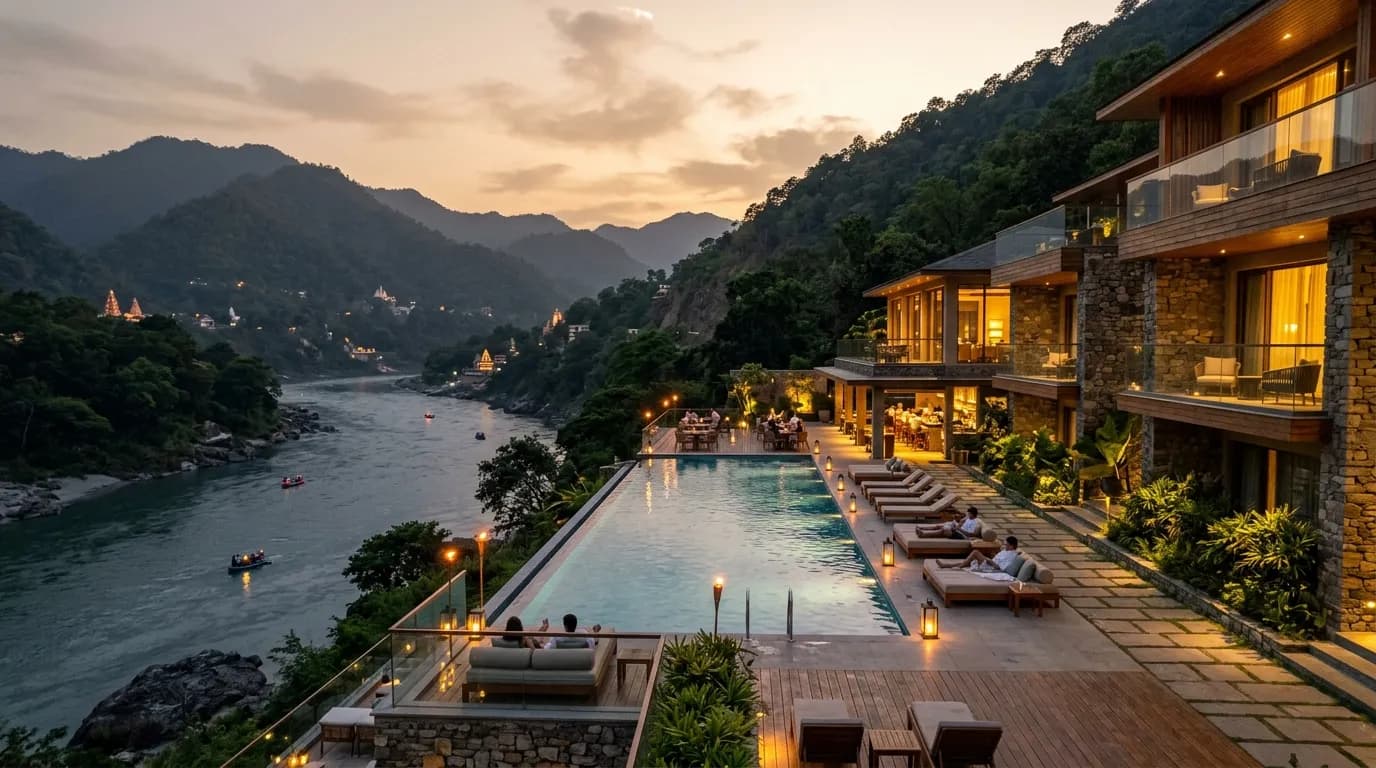
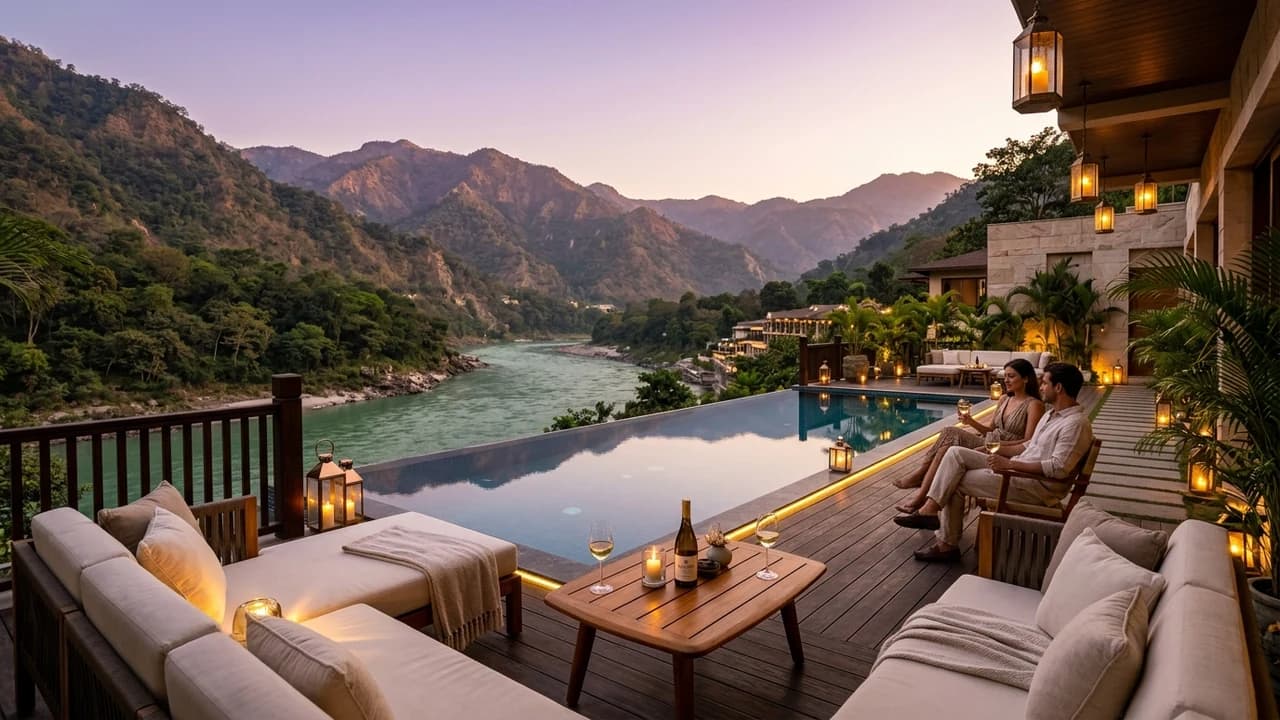
The Strategic Pivot: The monsoon is the time to completely abandon outdoor canvas camping in favor of permanent, cliff-mounted 5-star architecture and private villas in foothill zones like Tapovan and Muni Ki Reti.
Mountain Road Safety: Navigating NH 58 and Landslide Corridors
Visiting Rishikesh during the rainy season requires a sober understanding of Himalayan geology. The foothills around the Garhwal basin consist of young, sedimentary rock strata that become saturated and unstable during sustained rainfall.
If your travel itinerary involves moving between Rishikesh city, the airport, and peripheral mountain belts, here is how the primary transit corridors behave:
The Safe Foothill Corridor (Low Risk)
- Route: Jolly Grant Airport (Dehradun) ➔ Nepali Farm ➔ Rishikesh City ➔ Muni Ki Reti ➔ Tapovan.
- Road Condition: Four-lane highway and well-engineered municipal bypasses. This entire lower stretch is virtually free of vertical mountain cuts and remains open and secure 99% of the time, even during torrential downpours. Staying in luxury properties around Tapovan or Muni Ki Reti eliminates almost all landslide exposure.
The Hill Highway Corridor: Badrinath National Highway NH 58 (Moderate to High Risk)
- Route: Tapovan ➔ Brahmpuri ➔ Shivpuri ➔ Byasi ➔ Kaudiyala.
- Vulnerable Chokepoints: Specific sections on this highway are notorious for falling debris, mudslides, and temporary roadblocks:
- Atali Cutting (near Shivpuri)
- Singtali Bridge stretch
- Malakhunti curve
- Kaudiyala bypass
| Route Corridor | Landslide Risk | Recommended Vehicle Type | Key Caution & Timing |
|---|---|---|---|
| Airport ➔ Muni Ki Reti / Tapovan | Very Low | Any Luxury Sedan / Cab | Safe 24/7; well-engineered 4-lane bypass |
| Tapovan ➔ Narendra Nagar Luxury Belt | Low | Premium Sedan / SUV | Broad highway with active PWD slope clearance |
| Tapovan ➔ Shivpuri (NH 58) | Moderate | High-Clearance SUV / 4WD | Daylight travel advised; watch Atali cutting |
| Shivpuri ➔ Byasi / Kaudiyala | High | High-Clearance SUV (Day Only) | Vulnerable to loose debris near Singtali & Malakhunti |
| Neelkanth Temple Hill Road | Very High | 4x4 Only (Night Travel Banned) | Steep narrow cuttings; strictly avoid during heavy downpours |
Essential Driving & Transit Rules for the Monsoon
- Never Drive at Night Above Tapovan: Heavy mountain rains severely diminish visibility, and falling stones (shooting rocks) cannot be spotted in the dark along vertical highway cuttings. All transit to cliffside resorts should be completed before sunset.
- Prioritize High-Clearance Vehicles: If you are traveling beyond Tapovan to luxury properties in Shivpuri or Narendra Nagar, skip low-slung city sedans in favor of high-clearance SUVs (Innova Crysta, Fortuner, Defender) that can navigate wet gravel and road debris easily.
- Monitor Live Disaster Updates: Keep track of official advisories issued by Uttarakhand Police and the District Disaster Management Authority (DDMA) Tehri/Pauri before driving into higher elevations.
Month-by-Month Monsoon Weather Breakdown
The monsoon season in Rishikesh is not a uniform three-month downpour. The weather evolves substantially from early July through late September, each month bringing a distinct atmosphere and operational conditions:
July: Sawan, Mist, and Pilgrimage Traffic
- Rainfall: Frequent, intense rain spells punctuated by humid afternoons.
- Atmosphere: High humidity, vibrant green vegetation bursting from every hillside.
- The Sawan Factor: July coincides with the sacred Shravan (Sawan) month and the massive Kanwar Yatra pilgrimage. Millions of Shiva devotees travel on foot along Haridwar Road and Rishikesh market corridors. Traffic diversions are standard around Muni Ki Reti and Lakshman Jhula, making strategic route planning and resort selection critical.
August: Peak Rains and Waterfall Surges
- Rainfall: The wettest month of the year. Sustained cloudbursts and heavy night rains are common.
- Atmosphere: Deep mountain mist settling low over the river valley. The air is cool and fragrant with pine and damp earth.
- Natural Attractions: Jungle waterfalls like Neer Garh, Patna Waterfall, and Garud Chatti are at their most spectacular, surging with mountain runoff. Daytime temperatures hover pleasantly around 26°C to 29°C.
September: The Clearing Skies and Rebirth
- Rainfall: Tapering, intermittent showers that gradually transition into crisp, clear sunny days.
- Atmosphere: The humidity breaks, replaced by cool Himalayan breezes. The muddy Ganges begins its magical transformation back to its trademark emerald-green hues.
- The Turning Point: By mid-to-late September, adventure tour operators begin river safety drills, beach camps start seasonal reconstruction, and peak luxury season officially kicks off.
The Rise of Indoor Luxury: Why VIPs Prefer the Rains
While budget backpackers mourn the closure of river rafting, affluent travelers and corporate leaders consider July and August the crown jewel of the Rishikesh calendar.
The reasons are rooted in privacy, atmosphere, and the unique architecture of modern luxury resorts:
1. Absolute Acoustic and Physical Seclusion
During the October-to-May peak season, popular areas like Tapovan and Lakshman Jhula are congested with tourist buses, motorbikes, and noisy crowds. In the monsoon, the noise evaporates. The only sounds echoing across the valley are the steady drumming of rain against glass terraces and the deep roar of the holy river below. If you value complete discretion and private sanctuary, the monsoon delivers an exclusivity that money cannot buy during peak season.
2. Suites Designed for Rainy Sanctuary
Top-tier resorts across Tapovan, Narendra Nagar, and the upper river road are built explicitly to turn rainy days into sensory retreats. Guests book expansive suites featuring:
- Private heated plunge pools and river-facing hot tubs on sheltered balconies.
- Indoor stone fireplaces and cozy wood-paneled lounges.
- Floor-to-ceiling double-glazed glass walls framing dramatic panoramas of cloud-wrapped peaks.
- 24-hour private butler and dining service, allowing you to spend days without ever stepping foot into a public lobby.
For a curated selection of properties equipped with these exact architectural standards, review our guide to the top 5 private luxury resorts in Rishikesh.
3. Classical Ayurvedic Rejuvenation (Varsha Ritu)
According to classical Ayurveda, the monsoon season (Varsha Ritu) is the single best time of the year for deep body therapies, panchakarma detox, and revitalizing treatments. The cool, dust-free, and humid atmosphere causes the body’s skin pores to open naturally, dramatically increasing the absorption of therapeutic herbal oils and deeply relaxing the nervous system. World-renowned wellness sanctuaries like Ananda in the Himalayas experience their most loyal high-ticket bookings during these wet months.
Curating a Romantic Rainy Day Itinerary
Without rafting or beach camping on the agenda, what does an upscale day in Rishikesh look like during the monsoon? The focus shifts effortlessly from adrenaline-pumping exhaustion to relaxed, self-indulgent intimacy.
Curated VIP Rainy-Day Itinerary (Sample Luxury Schedule)
Fresh artisanal French press coffee and breakfast served on your covered suite terrace overlooking cloud-draped Himalayan peaks.
Couple's warm herbal oil massage (Abhyanga) or private heated jacuzzi session while gentle rain drums on the conservatory glass.
Leisurely lunch at a glass-enclosed cliffside cafe with panoramic river views, enjoying artisanal sourdough and fresh Himalayan teas.
Relaxing in-suite fireside conversation with an elegant companion, completely shielded from outdoor weather.
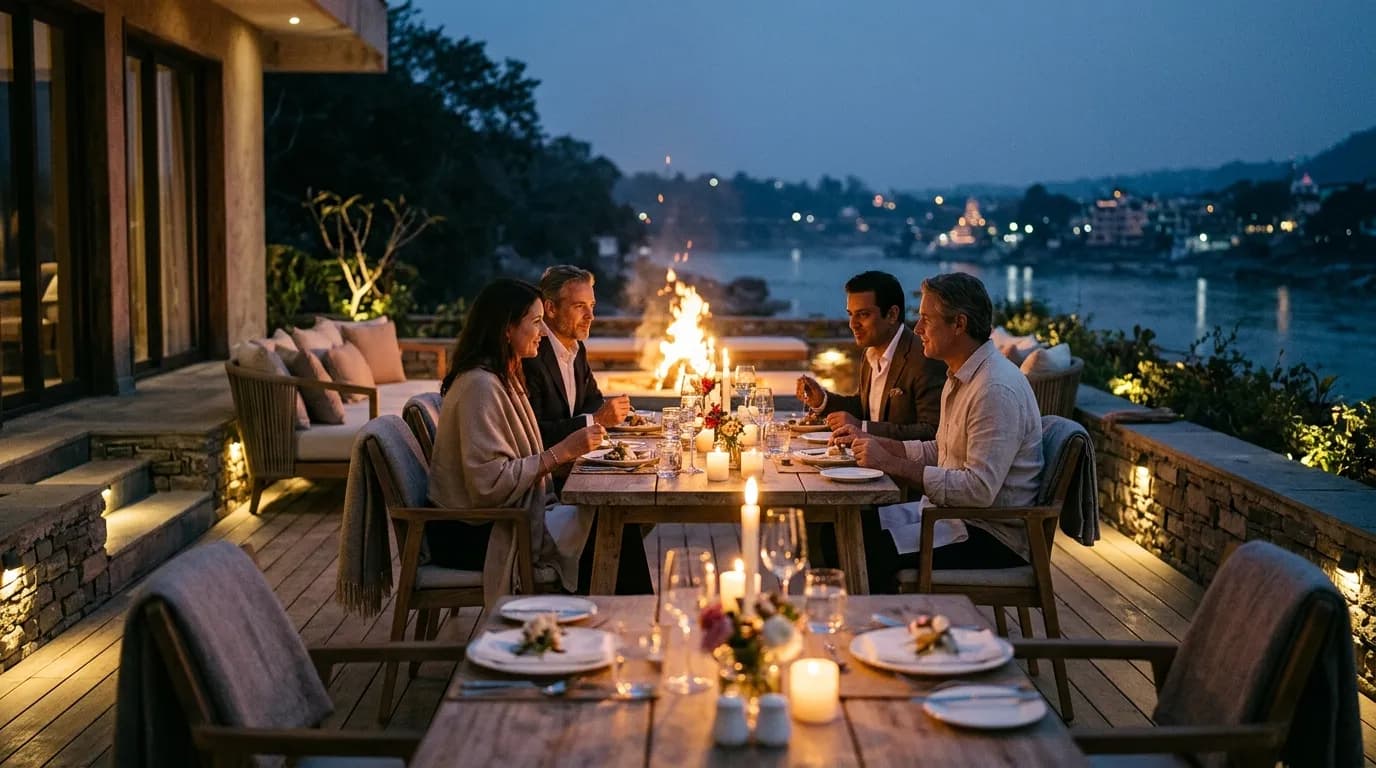
Multi-course private dining prepared by resort chefs and served in the privacy of your suite with ambient mountain nightscapes.
Sheltered Cafe Culture in Tapovan
While many open-air rooftop shacks close their canvas awnings during heavy showers, Rishikesh’s premier indoor and covered-terrace dining spots shine during the rains:
- The 60's (Cafe Delmar / Beatles Cafe): Perched high on the cliffside in Tapovan, its covered glass-enclosed veranda provides sweeping, romantic views of the rain sweeping across the valley.
- Jal & Jalebi: Ideal for refined indoor dining with artisanal Indian specialties, completely shielded from monsoon weather.
- Pure Soul Cafe: Tucked into a serene lane near Tapovan with an organic, plant-forward indoor dining space and floor-to-ceiling windows overlooking lush green forests.
For more insights into navigating evening dining discreetly, consult our safe nightlife guide to Rishikesh.
Evening Companionship & Rainy Day Outcall Dynamics
There are few experiences more genuinely comforting than listening to a torrential Himalayan downpour from inside a warm, opulent 5-star suite while enjoying the attentive company of a beautiful, sophisticated partner. The monsoon naturally fosters intimacy, making it one of the most rewarding times to book an extended companionship date.
However, executing a smooth, private outcall during the rainy season involves distinct logistical considerations that only a seasoned dispatch network can handle:
1. Dedicated Chauffeured 4WD Transit
Independent operators relying on shared auto-rickshaws or public cabs often get stranded when local roads waterlog or when hill traffic slows to a crawl. A professional managed agency utilizes dedicated private drivers in high-clearance vehicles who know alternative bypass routes around Muni Ki Reti and Tapovan, ensuring your companion arrives on time, impeccably groomed, and completely dry.
2. Pre-Cleared Lobby Access
When heavy rains push everyone indoors, hotel lobbies and front desks become more observant. A companion arriving drenched and flustered in casual rainwear draws unwanted attention. Our exclusive VIP models and companions travel prepared in elegant attire suitable for 5-star environments, bypassing front-desk friction seamlessly and preserving your total privacy.
3. Transparent, Cash-on-Arrival Policy
Travel plans in the mountains can shift due to sudden road clearances or flight delays. Legitimate local operators never exploit these conditions to demand upfront digital deposits. You verify your companion in person at your suite, and only then is payment settled in cash. Review our clear companion rates and booking terms to understand how legitimate agencies protect clients against monsoon booking scams.
Peak Summer vs. Monsoon Season: The Direct Comparison
To help you decide if a monsoon journey aligns with your personal travel goals, here is how the rainy season stacks up directly against the peak tourist season:
| Feature / Dynamic | Peak Summer Season (March – June) | Monsoon Season (July – September) |
|---|---|---|
| White-Water Rafting | Open & active across all stretches | Completely banned by UTDB |
| Riverbank Beach Camps | Packed with tourists & music | Dismantled & cleared by law |
| Tourist Density | High; heavy traffic jams in Tapovan | Low; serene, tranquil & uncrowded |
| Mountain Scenery | Dry, dusty hills & sun glare | Lush emerald jungles & dramatic cloudscapes |
| Luxury Suite Privacy | Moderate; resort lobbies are busy | Maximum; extreme intimacy & seclusion |
| Ambient Temperature | Hot (34°C – 40°C) | Pleasant & cool (25°C – 29°C) |
| 5-Star Resort Rates | Peak surge pricing | Attractive seasonal luxury packages |
| Primary Activity | Adventure sports & outdoor tours | Spa therapy, fine dining & indoor luxury |
Essential Monsoon Packing & Preparation Checklist
If you are packing for a rainy-season getaway in Rishikesh, tailor your luggage to mountain conditions:
- Footwear: Bring at least one pair of waterproof shoes with aggressive rubber treads for navigating wet flagstone walkways and resort garden paths. High heels and smooth-soled leather dress shoes are hazardous on wet mountain marble.
- Wardrobe: Light, breathable, quick-drying fabrics. Evenings can turn surprisingly cool after a thunderstorm, so pack a light cashmere wrap, blazer, or fleece jacket.
- Power & Electronics: Pack high-capacity power banks. While 5-star resorts maintain uninterrupted generator power, temporary grid trips are common in the foothills during electrical storms.
- Cash Preparedness: Ensure you withdraw sufficient currency at Dehradun Airport or before leaving the plains. Heavy weekend rains occasionally disrupt local ATM connectivity in Tapovan.
Frequently Asked Questions
Is river rafting completely banned in Rishikesh during the monsoon?+
Yes. Commercial white-water rafting is officially closed by the Uttarakhand Tourism Development Board from July 1 until mid-September every year due to dangerous river discharge levels, submerged debris, and flash flood hazards. Rafting resumes only after river safety audits in late September or early October.
Is it safe to travel to Rishikesh during July and August?+
Yes, provided you choose the right location and transportation. Lower foothill zones like Muni Ki Reti, Tapovan, and Narendra Nagar are connected by well-maintained highways and remain safe throughout the season. However, driving deep into the hills beyond Shivpuri on NH 58 during heavy night rains should be avoided due to localized landslide risks.
Are luxury resorts and 5-star hotels open during the monsoon?+
All major luxury resorts, heritage wellness retreats, and boutique hotels in Rishikesh remain open throughout the monsoon. In fact, many high-end properties offer exclusive seasonal wellness, spa, and rejuvenation packages that are popular among corporate leaders and VIP guests.
What is the Kanwar Yatra, and how does it affect Rishikesh travel in July?+
The Kanwar Yatra is an annual pilgrimage during the Hindu month of Shravan (July) where millions of devotees visit the holy Ganges. It brings massive pedestrian crowds to the Haridwar-Rishikesh highway and leads to local traffic diversions. If visiting in July, flying into Dehradun Airport and using luxury foothill bypasses to reach Tapovan is strongly advised.
Can I arrange private hotel outcalls with a companion during the monsoon?+
Yes. In-suite companion visits are highly popular during the rainy season because guests spend extended time relaxing indoors. A professional managed agency uses dedicated, private chauffeured 4WD vehicles to ensure companions arrive punctually and discreetly, regardless of outdoor weather conditions.
Why is the monsoon considered ideal for Ayurvedic spa treatments?+
Classical Ayurvedic medical tradition identifies the rainy season (Varsha Ritu) as the optimal period for detoxification and rejuvenation. The cool, humid climate opens skin pores and enhances the therapeutic benefits of medicated oils, making wellness retreats exceptionally effective during these months.
Summary: Embracing the Magic of the Rainy Season
Official Sources & Government Advisories
To verify current river advisories, rainfall forecasts, and road conditions directly from authentic regulatory bodies before your trip, consult the following official portals:
- Uttarakhand Tourism Development Board (UTDB): River rafting guidelines and safety advisories — uttarakhandtourism.gov.in
- India Meteorological Department (IMD Dehradun): Regional mountain weather bulletins and rainfall warnings — mausam.imd.gov.in/dehradun
- Central Water Commission (CWC): Ganga flood forecasting and water-level monitoring — ffs.india-water.gov.in
- Uttarakhand State Disaster Management Authority (USDMA): Real-time highway status and landslide alerts on NH 58 — usdma.uk.gov.in
- National Green Tribunal (NGT): Regulatory directives on riverbed camping in the Rishikesh-Kaudiyala eco-fragile corridor — greentribunal.gov.in
The monsoon in Rishikesh is a masterclass in atmospheric transformation. By trading the high-decibel chaos of river rafting for the tranquil rhythm of rain against mountain glass, you discover an entirely different side of the Yoga Capital: one defined by mist-shrouded green hills, deep holistic wellness, and unmatched private luxury.
When properly planned—with lodging chosen in safe foothill corridors like Tapovan or Muni Ki Reti and reliable chauffeur transportation arranged—a rainy getaway offers the ultimate setting for romance, relaxation, and bespoke company.
If you are planning an intimate monsoon retreat and value complete discretion, prompt outcall coordination, and in-person verification, explore our exclusive model gallery and review our straightforward booking rates to make your stay unforgettable.
Neha specializes in luxury tourism itineraries, private villa bookings, and nightlife navigation across Rishikesh and Dehradun.